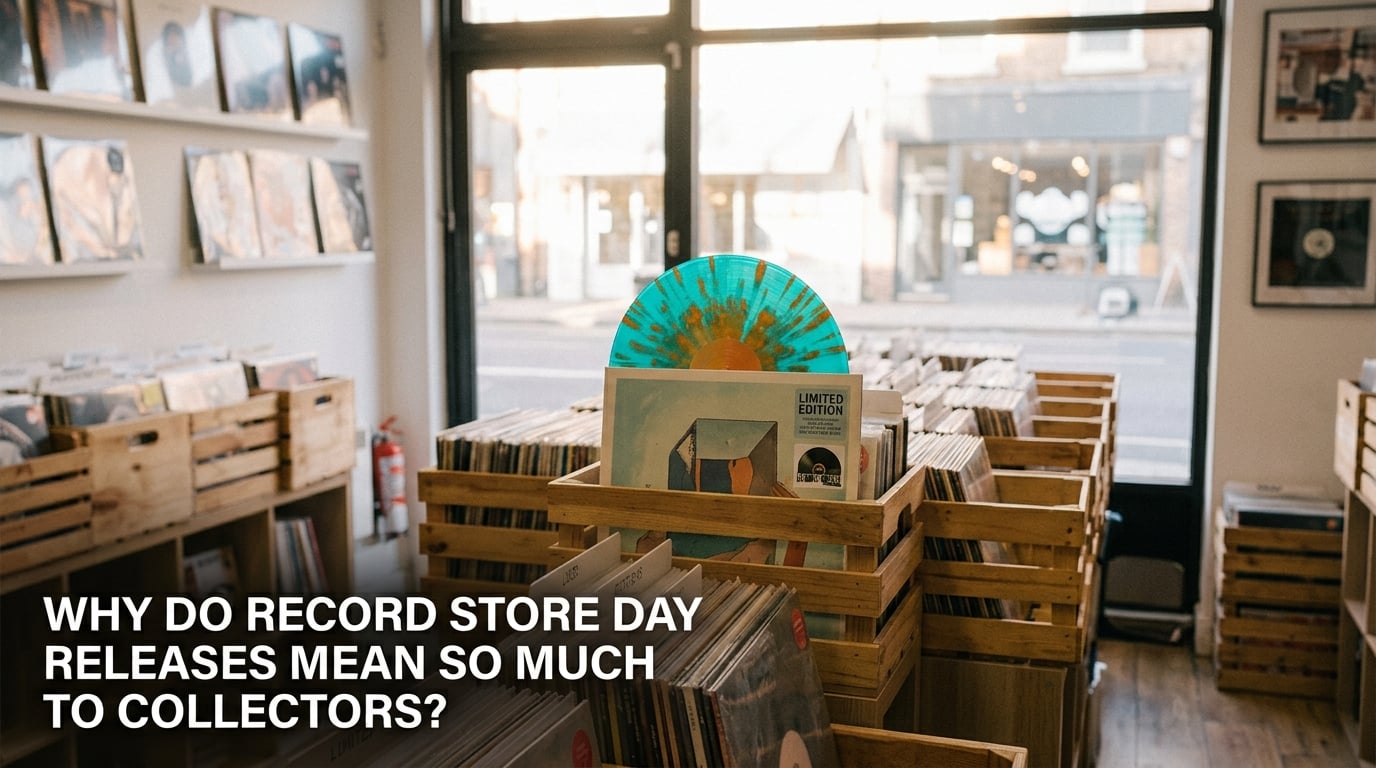
Record Store Day releases mean so much to collectors because they deliver three things no regular pressing can match: scarcity (small numbered pressings of a few hundred to a few thousand copies), ritual (the queue, the store, the shared anticipation with strangers), and artifact quality (unique artwork, colored vinyl, bonus tracks, and packaging that turn a record into a keepsake). The day itself has become the cultural anchor of the modern vinyl revival, and for many collectors it is less about the record on the shelf than about the experience of earning it.
That experience is what keeps fans lining up before sunrise each April, planning their route between indie shops weeks in advance, and trading stories on Reddit r/vinyl and r/RecordStoreDay for months afterward. Below I break down the history, the psychology, the community, and the honest critiques behind why Record Store Day exclusives continue to drive collector culture year after year.
On this pageTable of Contents
- How Record Store Day Started and Why It Still Matters
- Five reasons Record Store Day exclusives matter to collectors
- The Scarcity and Limited Pressing Psychology Behind RSD Exclusives
- What makes an RSD exclusive different from a regular release
- The Community and Ritual of Record Store Day Itself
- How collectors experience the day
- The Emotional and Generational Appeal of Vinyl and RSD
- Why Gen Z and younger collectors chase RSD releases
- How RSD Releases Compare to Regular Vinyl Pressings
- RSD exclusive vs standard vinyl release
- The Honest Critique: Flippers, Bots, and the Commercialization of RSD
- Frequently Asked Questions
- What is the big deal about Record Store Day?
- What does limited edition vinyl mean?
- Why are Gen Z buying vinyls?
- Is Record Store Day a rip-off?
- What is the most sought-after vinyl record?
- What are the best limited edition vinyl records to collect?
- What vinyl records are collectors looking for?
- What is the hardest vinyl record to find?
- Why the Hunt Will Always Be Part of the Reward
How Record Store Day Started and Why It Still Matters
Record Store Day was founded in 2007 by a coalition of independent record store owners, with the first event held in Baltimore the following April. The stated mission was simple: drive foot traffic into indie record stores at a moment when CD sales were collapsing and vinyl had been written off as a dead format. The early years leaned heavily on local artist performances, giveaways, and a small list of exclusive vinyl pressed in runs of a few thousand copies.
By the early 2010s, Record Store Day had grown into a global event with hundreds of participating stores and a celebrity-backed list that included titles from The Rolling Stones, Taylor Swift, and major indie labels. A second drop, RSD Black Friday, was added in 2010 to give the same treatment to late-year shopping. Today, Record Store Day is the single largest sales day of the year for most independent record stores in the United States and the United Kingdom.
The reason this origin matters to collectors is that the day was never designed around streaming metrics or chart performance. It was designed around the act of walking into a local shop, talking to the person behind the counter, and buying a physical object. That mission still shapes every exclusive on the shelf.
Five reasons Record Store Day exclusives matter to collectors
- Scarcity of a fixed pressing run, often 500 to a few thousand copies
- Ritual of queuing, planning, and being in a specific store on a specific morning
- Community with clerks, regulars, and strangers who share the same list
- Artifact quality in the form of colored vinyl, gatefolds, inserts, and bonus tracks
- Support of independent record stores, the original purpose of the event
The Scarcity and Limited Pressing Psychology Behind RSD Exclusives
Scarcity is the engine of the entire Record Store Day phenomenon. The average RSD exclusive is pressed in a run of 1,500 to 2,500 copies for the entire country, and many of the most talked-about titles are pressed in under 1,000. Once that run sells out, the title is rarely repressed, because the exclusivity is the point. Collectors respond to this scarcity in predictable ways: planning their lists weeks in advance, calling stores ahead of time, and showing up early to avoid missing out.
This is the same psychology Robert Cialdini described in his scarcity principle: items become more valuable when their availability is limited. Disc Makers and other industry writers have applied the same framework to RSD, noting that limited pressing numbers turn a record from a music delivery device into a collectible object. The number on the back of the sleeve, the matrix number etched into the dead wax, the color of the vinyl, and the inclusion of an insert or poster all add layers of perceived value that go beyond the music itself.
What makes an RSD exclusive different from a regular release
- Pressing run is fixed and capped, often under 2,500 copies
- Numbered editions include a printed number on the sleeve or sticker
- Colored vinyl variants such as splatter, marbled, or picture disc replace standard black
- Packaging upgrades include gatefold sleeves, embossed art, posters, and obi strips
- Bonus tracks include live recordings, demos, alternate mixes, or unreleased material
- Distribution is in-store only at participating independent record stores, not online
Reviewers on Discogs and Reddit r/vinyl often point out that the after-market value of an RSD exclusive reflects these features. A title that retails for one price at the counter can flip for several times that within days on the secondary market, especially when the pressing run was small and the artist has a built-in collector base.
The Community and Ritual of Record Store Day Itself
The community is the part of Record Store Day that no streaming service can replicate. On the morning of the drop, regulars line up outside their local shop with camp chairs, coffees, and printed checklists. They trade tips about which pressing of which title is rumored to have a small run. They bump into neighbors they only see on this one day of the year. The clerks know their names.
Stores reinforce this ritual with in-store performances, DJ sets, meet-and-greets, and small giveaways for the early arrivers. Live performances in particular add disproportionate value to the day. A short acoustic set by an artist whose record is on the list turns a routine purchase into a memory that lives in the collector’s head long after the vinyl is filed away. Reddit threads on r/RecordStoreDay frequently describe these performances as the moment that converts a casual buyer into a yearly regular.
The hunt itself is part of the value. Many collectors treat the day as a route between two or three local shops, comparing stock and trading leftovers with friends who hit other neighborhoods. Several long-time collectors I have spoken with describe the planning list, the early alarm, and the drive across town as half the reward. The disc is the trophy at the end of a small personal adventure, not a click-to-buy impulse.
How collectors experience the day
- Planning the list weeks ahead using the official RSD announcement
- Calling or visiting local stores in the week before to confirm stock
- Queuing before opening to avoid missing limited copies
- Hitting multiple shops on the same morning to compare stock
- Posting hauls on Instagram or TikTok to share the moment
- Trading duplicates with friends or on Discogs afterward
This ritual is also generational. Younger collectors entering the hobby through TikTok and Instagram find on Record Store Day the kind of in-person community that feels new to them, while older vinyl enthusiasts rediscover the camaraderie of the record stores they haunted in their teens. The day has become one of the few shared cultural touchpoints where Gen X and Gen Z collectors genuinely overlap.
The Emotional and Generational Appeal of Vinyl and RSD
The emotional appeal of vinyl has been the subject of academic study in recent years. Researchers who interviewed Gen X, Gen Y, and Gen Z collectors found that the tactile experience of holding a record, removing it from its sleeve, and placing it on a turntable creates a sense of ownership and presence that streaming access cannot match. The slow ritual of flipping the record, reading the liner notes, and studying the sleeve art is a form of active listening that turns into decorative art when the sleeve ends up on a wall.
For Gen Z collectors in particular, vinyl is also a form of identity expression. Posting a haul on Instagram or filming the first spin for TikTok is part of the value of the purchase. The record is a personal artifact that says something about who the collector is and what they care about. Record Store Day concentrates this identity work into a single morning, which is why a successful haul feels so much bigger than a list of checkmarks.
The nostalgia piece cuts the other direction for older collectors. Many Gen X vinyl enthusiasts credit rediscovering records they had stored for decades as the spark that brought them back to the format. A new RSD pressing of a record they loved in high school feels less like a purchase and more like a reunion.
Why Gen Z and younger collectors chase RSD releases
- Physical ownership feels meaningful in a world of streaming subscriptions
- Tactile engagement (the sleeve, the weight of the vinyl, the liner notes) is part of the appeal
- Record Store Day content travels well on TikTok and Instagram
- Limited pressings function as affordable entry points to collecting
- Older collectors act as informal mentors, sharing lists and tips across generations
This cross-generational dynamic is one of the most underappreciated parts of the modern vinyl revival. Older collectors bring the pressing history, the matrix-number lore, and the knowledge of which pressing plants still cut quiet vinyl. Younger collectors bring the energy, the social reach, and a fresh willingness to pay for beautifully colored pressings. Record Store Day is the one day each year when those two groups are physically in the same room, comparing notes.
How RSD Releases Compare to Regular Vinyl Pressings
The clearest way to understand what collectors see in RSD exclusives is to put them side by side with a standard catalog reissue. The differences go well beyond the cover art. Pressing runs are smaller, packaging is upgraded, distribution is restricted to indie stores, and after-market value can move in either direction depending on the title.
RSD exclusive vs standard vinyl release
- Pressing run: limited (often under 2,500) versus open and ongoing
- Packaging: colored vinyl, gatefold, inserts, obi strips versus standard sleeve
- Bonus material: live cuts, demos, alternate mixes versus standard tracklist
- Distribution: participating indie record stores only versus wide retail
- After-market value: often multiple times retail versus close to retail
- Resale behavior: frequently flipped on Discogs and eBay within days
Iconic examples help anchor the value conversation. Wu-Tang Clan pressed a single copy of Once Upon a Time in Shaolin and famously offered it to the highest bidder, becoming the gold-standard anecdote for what a limited vinyl release can become. Taylor Swift has used RSD to drop numbered, colored variants of her catalog that routinely sell out in minutes and trade for several times retail within hours. The Beatles have appeared on RSD lists multiple times with remastered and expanded pressings that longtime collectors treat as reference versions.
Other examples collectors point to include Neutral Milk Hotel repressings, Flaming Lips super-deluxe box sets, Trent Reznor archival material, and major-label anniversary editions of classic albums. The pattern is the same across genres: small pressing run, distinctive packaging, and a story collectors can repeat when they pull the record off the shelf.
The Honest Critique: Flippers, Bots, and the Commercialization of RSD
No honest article about Record Store Day can skip the criticism. The flipper problem is real, and most longtime collectors will tell you it has gotten worse over the past decade. Scalpers using bots, group buys, and even physical proxies clear out small pressing runs within minutes of doors opening. Titles that retailed for one price at the counter often appear on eBay and Discogs the same afternoon at several times that price.
There are structural reasons for this. Pressing plants have limited capacity, especially for special variants like colored and splatter vinyl. Independent record stores are forced to over-buy to guarantee allocation on the titles their regulars want, which leaves them stuck with unsold inventory when the most aggressive collectors clear the shelves. Big labels crowding the list with Rolling Stones and Taylor Swift variants can crowd out smaller indie artists who depend on the day for exposure.
The counter-perspective is also real. RSD remains the single biggest revenue day of the year for most independent record stores, and the exclusives keep foot traffic high on a morning when streaming has made browsing feel almost obsolete. Many stores now limit purchases to one copy per customer and reserve the rarest titles for walk-ups rather than online orders. Stores that enforce those rules earn genuine loyalty from collectors who view them as ethical operators.
The honest answer to “is Record Store Day a rip-off?” is that it depends on how you approach it. A collector who plans a sensible list, supports the local store, and treats the day as a ritual will almost always walk away with something meaningful. A collector who chases every title on the list, pays scalper prices on the secondary market, and leaves the day frustrated is treating the day as a shopping sprint, not a community event. The day rewards the first approach and punishes the second.
Frequently Asked Questions
What is the big deal about Record Store Day?
Record Store Day is the single largest sales day of the year for most independent record stores in the US and UK. It combines exclusive vinyl pressings, in-store performances, and a community ritual that turns a routine shopping trip into a yearly event collectors plan around months in advance.
What does limited edition vinyl mean?
Limited edition vinyl means a record has been pressed in a fixed, capped run that will not be repressed once sold out. RSD exclusives typically run between 500 and a few thousand copies, often in colored variants, with numbered sleeves and bonus tracks that regular catalog pressings do not include.
Why are Gen Z buying vinyls?
Gen Z collectors buy vinyl for ownership, tactile engagement, social media expression, and the slow ritual of active listening. Many enter the hobby through TikTok and Instagram, where Record Store Day hauls and first-spin videos perform especially well.
Is Record Store Day a rip-off?
Record Store Day can feel like a rip-off when scalpers clear shelves and flip titles at several times retail the same afternoon. For collectors who plan a sensible list, support their local indie store, and treat the day as a community ritual, it is usually one of the best days of the year for vinyl.
What is the most sought-after vinyl record?
Wu-Tang Clan pressed a single copy of Once Upon a Time in Shaolin and famously offered it at auction. Among more accessible collector pieces, numbered RSD variants of Taylor Swift, Beatles anniversary pressings, and Neutral Milk Hotel repressings are consistently the most sought-after titles.
What are the best limited edition vinyl records to collect?
Collectors point to numbered RSD pressings of Taylor Swift catalog variants, Beatles remastered anniversary editions, Neutral Milk Hotel repressings, Flaming Lips super-deluxe box sets, and Trent Reznor archival releases as consistent favorites. The throughline is small pressing runs, distinctive packaging, and bonus material that adds to the listening experience.
What vinyl records are collectors looking for?
Collectors focus on four value drivers: rarity (small pressing runs and numbered editions), artist significance (catalog depth and fan base), packaging (gatefolds, colored vinyl, inserts, posters), and condition (graded sleeve and vinyl quality). Titles that combine all four command the strongest after-market interest.
What is the hardest vinyl record to find?
Wu-Tang Clan pressed a single copy of Once Upon a Time in Shaolin and auctioned it to the highest bidder. Beyond that extreme, numbered RSD variants with tiny pressing runs and rare original pressings from the 1960s and 1970s are consistently the hardest vinyl records to find.
Why the Hunt Will Always Be Part of the Reward
Record Store Day releases mean so much to collectors because they reward the process as much as the product. The list, the queue, the clerks, the friends you bump into, the cold morning, the first record sliding out of the sleeve, and the slow listen that night are all part of the same package. No streaming subscription, no digital storefront, and no after-market flip can reproduce that arc. That is why the day keeps drawing collectors back, even when the scalpers win a few rounds and the list gets crowded with major-label variants.
If you are planning your first Record Store Day, my honest advice is to keep your list short, support the staff who enforce fair purchase limits, and treat the morning as a ritual rather than a sprint. You will walk away with a smaller haul and a much better story, and you will understand by the end of the day why Record Store Day releases mean so much to the collectors who line up every April.